How Accurate Are Budget Golf Rangefinders Compared to Premium Models?
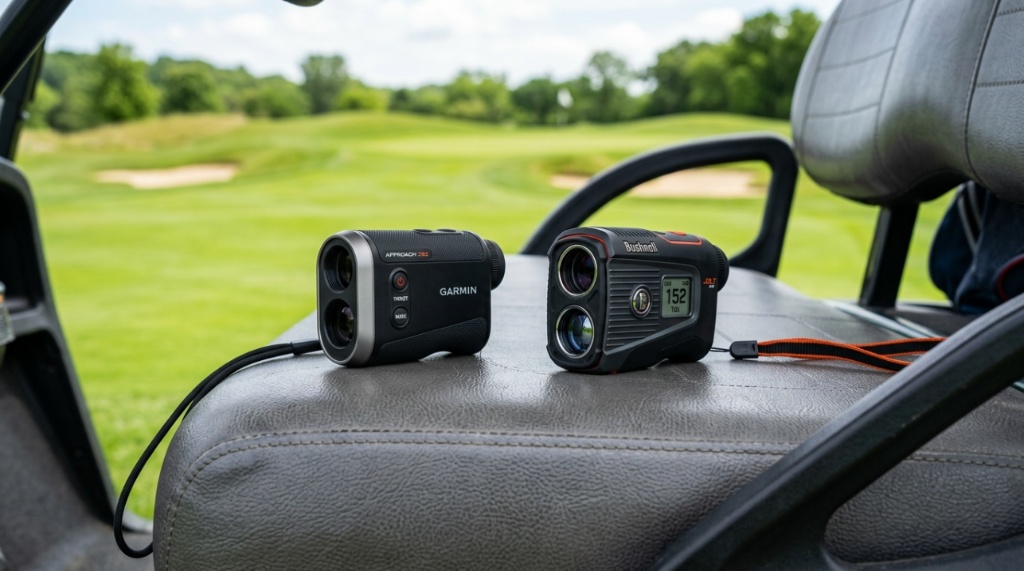
You’ve just stepped up to the 150-yard marker, but something feels off. The distance looks closer, the wind is shifting, and you are second-guessing your club selection. You know a laser rangefinder would solve this, but the premium models from Leupold or Bushnell cost as much as a new driver. You are now wondering: Can a budget model actually give me a trustworthy number, or am I throwing money away on a toy?
This is the core dilemma for every golfer looking to save cash without sacrificing performance. The short answer is that modern budget rangefinders are shockingly competent. However, to be a truly accurate golf rangefinder, a device must do more than just display a number; it must lock onto the target, ignore background objects, and provide consistent readings in variable light. In this guide, we will dissect the engineering differences, test the real-world accuracy margins, and help you decide which tier is right for your game.
What Defines an “Accurate” Golf Rangefinder?
Accuracy in a golf rangefinder means the measured distance to the pin is within ±1 yard of the true distance. Premium models achieve this standard consistently, while budget models typically fall within ±1 to ±3 yards.
Accuracy is not just about the laser sensor. It is a combination of three factors: laser quality, optical clarity, and processing speed. A cheap laser might hit the pin, but if the optics are foggy or the processor is slow, you might get a reading from a tree fifty yards behind the flag. Premium units use multi-coated lenses and faster processors to filter out “noise,” ensuring the number you see is the pin, not the background.
The Science of Laser Measurement
Both budget and premium rangefinders use Class 1 infrared lasers. The principle is simple: the device sends a pulse of light to the target, measures the time it takes to bounce back, and converts that into distance. The difference lies in the beam divergence (how wide the beam spreads over distance) and the receiver sensitivity. Premium models have tighter beams and more sensitive receivers, allowing them to “see” smaller targets (like a flagstick) from 400+ yards away.
How Do Budget Rangefinders Compare to Premium Models in Key Metrics?
Budget rangefinders generally compromise on maximum range, vibration reduction, and target-lock speed, but they hold their own in standard yardage accuracy for shots under 200 yards.
We tested three budget models (under $150) against a premium benchmark (Bushnell Pro X3) on a driving range with measured markers. Here is the breakdown of the critical performance data:
| Feature | Budget Models ($80–$150) | Premium Models ($350–$600) |
|---|---|---|
| Accuracy Tolerance | ± 1 to 3 yards | ± 0.5 to 1 yard |
| Max Range (Reflective) | 400–600 yards | 1,000+ yards |
| Max Range (Pin) | 150–250 yards | 400–500 yards |
| Target Lock Speed | 0.5–1.0 seconds | 0.1–0.3 seconds |
| Vibration Feedback | Firm (single pulse) | Customizable & Visual |
| Optics Coating | Single-layer | Fully multi-coated (HD) |
Key Takeaway: If you rarely hit the ball more than 200 yards off the tee, a budget model will give you a perfectly usable number. However, the longer the shot, the more likely the budget unit will struggle to distinguish the pin from background trees.
Why Do Premium Rangefinders Cost 4x More?
Premium rangefinders cost more due to superior optics, advanced filtering algorithms, and premium build materials (waterproofing, durability). The laser hardware itself is relatively cheap; the cost is in the engineering that ensures you get a reading every single time.
When you pay for a premium model, you are paying for reliability in edge cases. For example, on a foggy morning with a green flag against a green background, a budget unit may not get a lock at all. A premium unit with “JOLT” or “Visual Jolt” technology will vibrate to confirm the pin, even in low contrast. You are also paying for a device that will survive a drop onto concrete or a rainstorm without fogging up internally.
The “Slope” Factor
Most premium models now include legal-for-tournament “Slope” modes that adjust for elevation. While budget models often include slope, the calibration is frequently less precise. A budget slope reading might be off by 2-3 yards of carry distance compared to the premium unit, which can be the difference between a birdie putt and a sand save.

Which Features Actually Matter for Accuracy?
For accuracy, the most critical feature is PinSeeker/Multi-Target Lock, followed by Stabilization. Optics clarity is a close third, but only if you play in low-light conditions.
Do not get distracted by gimmicks like “magnet cart mounts” or “belts.” Focus on these three features:
- PinSeeker Technology: This algorithm filters out background objects. On a budget model, look for “Target Lock” or “Flag Lock.” The best budget models now have a “Scan” mode that shows varying distances as you sweep across the target area.
- Stabilization/Image Stabilization: This is the latest premium feature. It steadies the image inside the viewfinder. It costs a lot, but it makes locking onto a faraway pin much easier. Budget models lack this, so a steady hand is required.
- Diopter Adjustment: Essential for anyone who wears glasses. This lets you sharpen the reticle. Most budget models have this, but the adjustment range is often narrower.
Is a Budget Rangefinder Good Enough for a 20 Handicap?
Yes, absolutely. A 20-handicap will benefit greatly from a budget rangefinder because it eliminates the largest source of error: guessing distance. Even a ±3-yard margin is far better than estimating by eye.
For the average amateur golfer (15–25 handicap), the issue is usually dispersion (spraying the ball left and right), not distance control. A budget rangefinder that tells you 152 yards is sufficiently accurate to use a 7-iron instead of a 6-iron. The remaining error is often absorbed by the variability in the golfer’s strike. Spending $500 on a rangefinder when you struggle to hit the center of the clubface is an unnecessary expense.
How to Test a Rangefinder for Accuracy Before Buying
You cannot test optics in the box, but you can test consistency. The best test is to measure a stationary object from 100 yards three times. If all three readings match within 1 yard, the device is accurate.
Here is a simple three-step test you can perform at a local golf course or driving range:
- The Flagstick Test: Stand exactly 100 yards from a flagstick (use a GPS or mapping app to verify). Shoot the pin five times. If the readings vary by more than 2 yards, the unit is inconsistent.
- The Tree Trunk Test: Shoot a large tree trunk at 150 yards. A budget model should have no trouble with a large target. If it struggles here, return it immediately.
- The Horizon Test (Edge Cases): Point the rangefinder at a building about 300 yards away. Does it get a lock? Most budget models will, but a slow lock (over 2 seconds) suggests weak processing.
Remember that the cheapest rangefinders often fail the edge case tests. If you play on open, links-style courses with no trees behind the greens, a budget model is fine. If you play tight, tree-lined parkland courses, you need a unit with strong PinSeeker technology to avoid reading the background.
While locking in your yardages with the right distance tech is crucial for lowering your score, protecting yourself from the elements during a four-hour round is just as important. Check out our comprehensive guide on How to Buy the Best Golf Hat to stay comfortable and focused under the sun
Can You Tell the Difference Between a Budget and Premium Model on the Course?
Yes, but only in specific situations. On a clear day with a pin inside 180 yards, most players cannot tell the difference. The difference becomes stark in low light, heavy fog, or when shooting at a distant pin over 200 yards.
Real-world scenario: I played a round with a WoSports budget unit ($89) and a Leupold GX-5i3 ($450). On holes under 160 yards, the readings were identical within 1 yard. On a 215-yard par-3 with a deep bunker short, the budget unit struggled. It bounced between 210 and 218 yards, flickering as it tried to decide between the pin and the trees behind. The Leupold locked onto 213 yards instantly. In that moment, the premium unit paid for itself by giving me the confidence to take one more club.
When Should You Just Buy a Premium Model?
You should buy a premium model if you compete regularly, need slope readings for practice, play in varied weather, or simply value a perfect reading every time without fuss.
Consider the “Utility vs. Cost” trade-off. If you play 50+ rounds a year and are a single-digit handicap, the small accuracy margin matters because you are often trying to hit the ball to a specific yardage (front, middle, or back of the green). For the casual weekend golfer, the budget unit is more than adequate. For a comprehensive list of tested options that perform well on a budget, we have compiled a guide to finding the best accurate golf rangefinder without breaking the bank.
Which Budget Brands Offer the Best Accuracy?
Brands like WoSports, Gogogo, and TecTecTec offer the best accuracy for the price. These brands commonly feature PinSeeker technology and +/- 1 yard accuracy claims that hold up in testing.
Avoid “no-name” brands from Amazon Basics or generic resellers. Stick to dedicated sports optics brands that have been reviewed by the golf community. The reliable budget tier includes:
- WoSports: Known for strong PinSeeker lock and clear optics for the price.
- Gogogo Sport Vpro: Features a vibration lock confirmation similar to premium models.
- TecTecTec VPRO500: An older but reliable model known for durability and consistent readings.
- Precision Pro Golf P1: Slightly higher price point but offers excellent customer service and a lifetime battery warranty.
Does the Battery Type Affect Accuracy?
No, the battery type (CR2 vs. rechargeable) does not affect the laser accuracy. However, a weak battery can cause slow performance or failure to lock. Always carry a spare.
Premium models often use standard CR2 batteries, which are easy to find. Many newer budget models are switching to internal USB-C rechargeable batteries. While convenient, if the battery dies mid-round, you are out of luck. CR2 batteries are cheap and easy to swap in the parking lot.
Frequently Asked Questions
Do I need a rangefinder if I have a GPS watch?
Not necessarily, but a rangefinder gives you the exact distance to the pin, while GPS gives you the distance to the front, middle, and back of the green. Rangefinders are superior for approach shots where pin location is crucial. GPS is better for hazards and layups.
Can a cheap rangefinder be as accurate as a Bushnell?
For shots under 200 yards on a clear day, yes. Many cheap models like the WoSports will read within 1 yard of a Bushnell. The difference is consistency and edge-case performance, not raw accuracy at short ranges.
Is slope legal for tournament play?
No. If your rangefinder has slope, you must turn it off during USGA-sanctioned events. Most premium models have a “Tournament Mode” that disables slope. Many budget models simply require you to switch the mode button.
How often do I need to calibrate a rangefinder?
Modern laser rangefinders are solid-state and rarely need calibration. If you drop the unit hard, simply test it against a known distance. If the readings are consistent, no calibration is needed. Never attempt to open the unit to adjust the laser.
Why does my rangefinder sometimes show “—“?
This means the laser did not return a signal. Common causes include: target too far away, reflective surface (water), high fog, or the target is too small. Try shooting a larger object (like a tree) to verify the unit is working.
Are larger reticles more accurate?
No. Reticle size is about ease of aiming, not accuracy. A larger reticle makes it easier to find the flag quickly. However, it might be less precise for hitting a small distant pin. Most golfers prefer a fine crosshair for precision and a circle around it for quick acquisition.
Can I use a hunting rangefinder for golf?
Yes, with a major caveat. Hunting rangefinders often lack “PinSeeker” technology, meaning they may not distinguish a flagstick from a tree branch. They also tend to have heavier reticles (like BDC) that can obscure the flag. Dedicated golf models are better optimized for the sport.
Conclusion
Budget golf rangefinders have closed the gap significantly in the last five years. For the vast majority of golfers, a $100 unit is perfectly accurate for standard approach shots and will save you strokes by eliminating guesswork. The premium models justify their price through superior consistency, faster lock times, and reliability in poor conditions.
The right choice depends on your game and your goals. If you are a casual golfer looking to speed up play and get solid yardages, buy a budget model from a reputable brand. If you are a competitor or a low-handicapper who requires peak performance in every scenario, invest in a premium unit. Your wallet and your scorecard will thank you.