

How to Learn Skateboarding as an Adult with the Right Board
Learning skateboarding as an adult brings excitement and challenge. You watch skaters flow through parks and feel that pull to join them. Many adults now pick up boards later in life, and they succeed with patience and the right approach.
The skateboard market reached USD 3.73 billion in 2025, showing more people of all ages embrace the sport. Additionally, research reveals skateboarding boosts mental health by cutting stress and building community ties. A solid adult beginner skateboard makes starting smoother and more enjoyable. This guide walks you through every step to roll confidently.
Why Adults Should Try Skateboarding
Adults gain a lot from skateboarding. First, it delivers strong physical exercise. You engage your core, legs, and arms while balancing and pushing. Sessions burn calories and improve coordination.
Moreover, skateboarding supports heart health. One study found adults at skateparks hit moderate to vigorous heart rates, matching recommended activity levels. Balance and flexibility grow too, which helps daily movements.
Mental benefits stand out equally. Skateboarding lowers anxiety and lifts mood. Skaters report less stress and more resilience from the focus it demands. It also connects you to supportive communities where ages mix freely.
Finally, adults often progress steadily. You bring better focus and commitment than kids. Many find the challenge refreshing and fun.
Busting Myths About Learning as an Adult
Many adults hesitate because they think skateboarding suits only the young. However, people in their 30s, 40s, and beyond learn successfully every day. Age brings caution, which actually prevents reckless falls.
Another myth claims adults fall more and get hurt worse. Yet proper gear and gradual practice keep risks low. Studies show most injuries happen without protection, not because of age.
You also worry about looking silly. In reality, skateparks welcome beginners warmly. Everyone recalls their first wobbly pushes. Starting now builds a skill that lasts lifelong.
Selecting the Perfect Skateboard for Adult Beginners
The right board changes everything for adults. Beginners need stability over flashy tricks. Choose completes that come fully assembled.
Deck width matters most. Adults do best with 8.25 to 8.75 inches wide. Wider decks give more foot room and steady rides. Taller or heavier skaters lean toward 8.5 inches or more.
Deck material counts too. Seven-ply maple offers durability and good pop. Avoid cheap woods that snap easily.
Trucks should match deck width. Medium-height options balance stability and turns. Loose them at first for easy steering, then tighten as skills grow.
Wheels affect the feel. Softer ones (78A to 87A) roll smooth over rough surfaces. Larger wheels (54mm to 60mm) handle cracks better. Hard wheels suit park tricks later.
Bearings start with ABEC-5 or higher for decent speed. Grip tape needs roughness to hold feet firmly.
Complete setups save hassle. Quality brands provide balanced parts ready to ride. This lets you focus on learning, not building.
Must-Have Protective Gear for Safe Starts
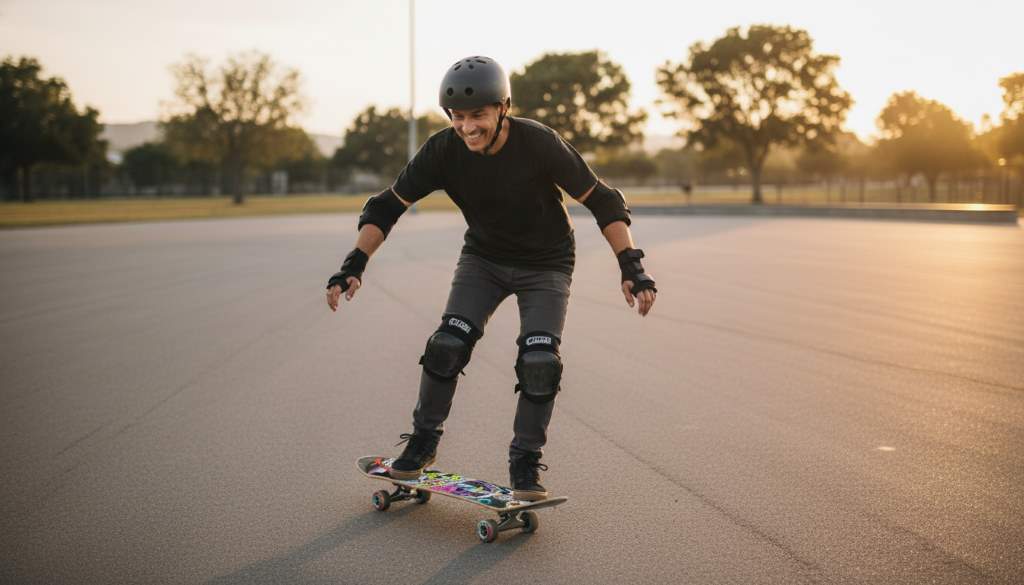
Safety comes first when you learn as an adult. Helmets top the list. Pick certified ones that fit snugly. They cut head injury risks dramatically.
Wrist guards prevent common breaks. Falls often happen forward, and guards absorb impact. Knee and elbow pads cushion hard landings.
Slide gloves help for certain stops, but start simple. Closed shoes with flat soles grip best. Avoid loose clothing that catches wheels.
Gear builds confidence. You push harder knowing protection exists. Many adults skip it and regret later.
Discovering Your Stance and Building Balance
Your stance sets the foundation. Regular means left foot forward; goofy means right foot forward. Test by having someone push you gently or slide on socks.
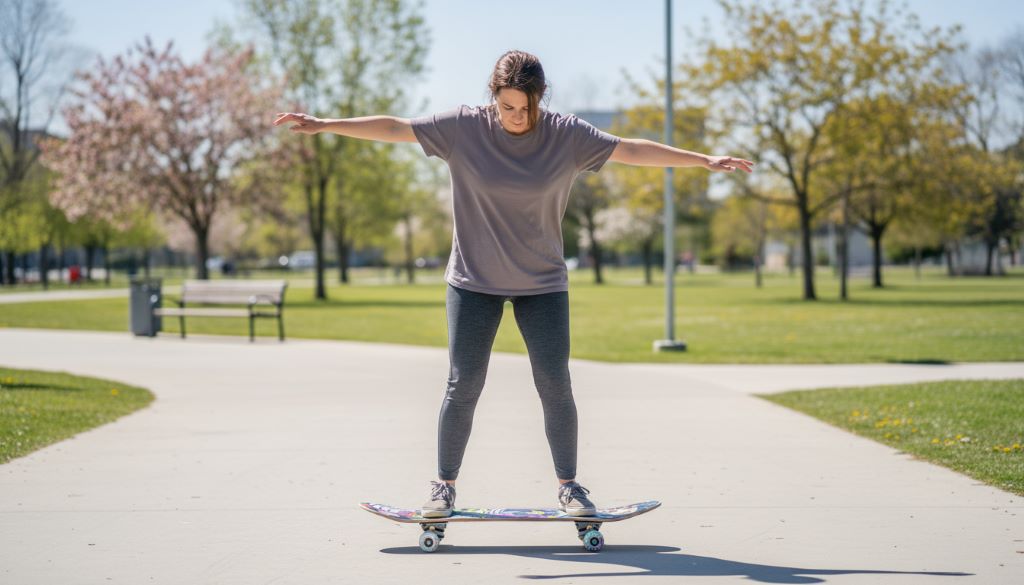
Place front foot angled over front bolts. Back foot goes on tail for pushing. Keep knees bent and eyes forward.
Practice balance on carpet first. Step on and shift weight. Rock side to side to feel the board. Stand on one foot to challenge stability.
Next, try grass. It slows movement safely. Hop on and off repeatedly. This builds muscle memory without speed fear.
Hold the position longer each time. Bend knees to lower center and stay steady. Relax shoulders and breathe deeply.
Mastering Pushing and Basic Riding
Pushing feels awkward at start, but it clicks fast. Place front foot near front bolts. Use back foot to push off ground.
Start with small pushes. Gain speed slowly. Return pushing foot to tail quickly. Look ahead, not down.
Ride in straight lines first. Keep weight centered. Bend knees to absorb bumps. Practice mongo push if it feels natural, though many switch later.
Stop with foot drag initially. Slide back foot lightly on ground. Build control gradually.
Ride daily for short sessions. Consistency beats long rare practices. You soon cruise comfortably.
Learning to Turn and Carve Smoothly
Turning starts with leaning. Shift weight to toes or heels. Front foot steers mainly.
Lean into turns gently. Commit weight fully. Practice tic-tac by lifting nose and pivoting.
Carving comes next. Make S-shapes to control speed on hills. Wide carves feel flowing and fun.
Kickturns lift nose and rotate board. Start stationary. Place back foot on tail, lift front, and turn hips.
Practice figure eights in open spaces. This sharpens control and balance.
Safe Stopping Techniques Every Adult Needs
Stopping safely prevents crashes. Foot braking works simplest. Drag back foot while keeping front planted.
Tail stop presses tail down hard. Use for quick halts once balanced.
Powerslides shift weight and slide wheels sideways. Learn later after basics.
Always check surroundings before stopping. Practice all methods to choose what fits situations.
Daily Practice Routines for Steady Progress
Adults progress best with structure. Warm up five minutes by stretching hips and ankles.
Spend ten minutes balancing and pushing. Then practice turns and stops. End with free cruising.
Session thirty to sixty minutes, three to five times weekly. Rest prevents burnout and injury.
Film yourself sometimes. Watch footage to spot improvements needed. Celebrate small wins like longer rides.
Track progress in a journal. Note new achievements. This keeps motivation high.
Avoiding Common Beginner Mistakes
Many adults push too hard early. Start slow to build control. Speed comes naturally later.
Another error stands stiff. Bent knees absorb shocks and aid balance. Relax arms for adjustments.
Looking down throws off balance. Keep eyes forward on path ahead.
Skipping gear invites injury. Wear protection every session without exception.
Quitting after falls stops progress. Get up and try again. Falls teach most.
Progressing to Basic Tricks Safely
Once cruising feels easy, try simple tricks. Ollies start everything. Snap tail while jumping and slide front foot.
Practice ollies stationary first. Then rolling slowly. Height grows with time.
Manuals balance on back wheels. Lift front and hold. Great for control.
Drop-ins begin ramps. Start small and commit weight.
Take tricks gradually. Master basics fully before advancing. Patience prevents frustration.
Related:
Are Bigger Skateboards Easier to Ride? Let’s Roll and Find Out!
Is It Safe to Skate in Shorts?
Joining Skate Communities and Finding Support
Skateboarding thrives on community. Visit local parks and watch sessions. Introduce yourself politely.
Many cities host adult skate nights. These welcoming events match skill levels.
Online forums and groups share tips. Connect with other adult learners for encouragement.
Lessons speed progress. Instructors spot bad habits early.
Communities motivate you to keep going.
Staying Motivated Through Plateaus
Plateaus hit everyone. Change routines when stuck. Try new spots or styles.
Set small goals weekly. Reward achievements with gear or outings.
Skate with friends for fun. Laughter eases pressure.
Remember initial reasons for starting. Joy and freedom pull you through tough days.
Conclusion
Learning skateboarding as an adult rewards you deeply. Choose the right board, prioritize safety, and practice consistently. You build skills, fitness, and connections.
Start today with small steps. Grab a board, gear up, and head outside. The skatepark community waits to welcome you. Roll into this adventure and enjoy every push.
Pick your board this week and schedule first sessions. Your skateboarding journey starts now—get out there and ride!
FAQs
Is skateboarding harder for adults than kids?
Adults learn differently but not necessarily harder. You bring focus and caution that help. Kids recover faster physically, yet adults progress steadily with commitment.
How long does it take adults to learn basics?
Most adults cruise comfortably in weeks with regular practice. Full basics like ollies take months. Consistency matters more than speed.
Can overweight adults learn skateboarding safely?
Yes, many do successfully. Start slow and build strength. Wider stable boards help. Consult doctors if concerns exist.
Do I need expensive boards to start?
No, quality completes work fine for beginners. Focus on fit and stability over cost. Upgrade once skills grow.
What if I fall a lot at first?
Falls happen to everyone. Wear gear and practice on soft surfaces. Each fall teaches balance. Persistence turns wobbles into smooth rides.
References
- Fortune Business Insights. Skateboard Market Size, 2025-2034. https://www.fortunebusinessinsights.com/skateboard-market-109870
- USC Pullias Center. Skateboarding Improves Mental Health Study. https://pullias.usc.edu/blog/groundbreaking-study-redefines-skateboarding-culture
- Characterization of Adult Heart Rate Responses During Skateboarding. https://pmc.ncbi.nlm.nih.gov/articles/PMC7241629
- Red Bull. Benefits of Skateboarding. https://www.redbull.com/us-en/benefits-skateboarding


