How to Prepare an Inflatable Paddle Board Before Getting on the Water
You’ve unboxed your new inflatable paddle board, but before you carry it to the shoreline, a few crucial steps separate a great session from a frustrating one. Proper preparation prevents the two most common paddling problems: equipment failure and wasted energy. The inflation stage is often where beginners struggle most, especially when using a manual pump in the heat. If you’re looking to simplify this process, you can learn more here about electric pumps that handle the heavy lifting. But regardless of your pump type, the sequence of checks you perform on land determines how safe and enjoyable your time on the water will be.
Quick Answer
To prepare an inflatable paddle board, inflate it to the manufacturer’s recommended PSI (typically 12–15 PSI for most boards), check that the fin is securely attached, verify the leash is connected, and ensure your paddle is properly assembled. Perform these checks on a flat surface away from sharp objects and water before carrying the board to the launch point.
Key Takeaways
- Inflate the board to the exact PSI listed on the valve or manual—under-inflation causes poor performance, while over-inflation risks seam damage.
- Attach the center fin last, after inflation, to avoid damaging it while the board is being moved or flipped.
- Always connect the ankle leash before entering the water, not after, to prevent losing the board if you fall.
- Give the board 5–10 minutes after inflation to settle, then top off the pressure if needed, as air cools and compresses.
- Check the weather, wind direction, and local regulations before leaving shore—preparation extends beyond the board itself.
Step-by-Step Inflation and Assembly
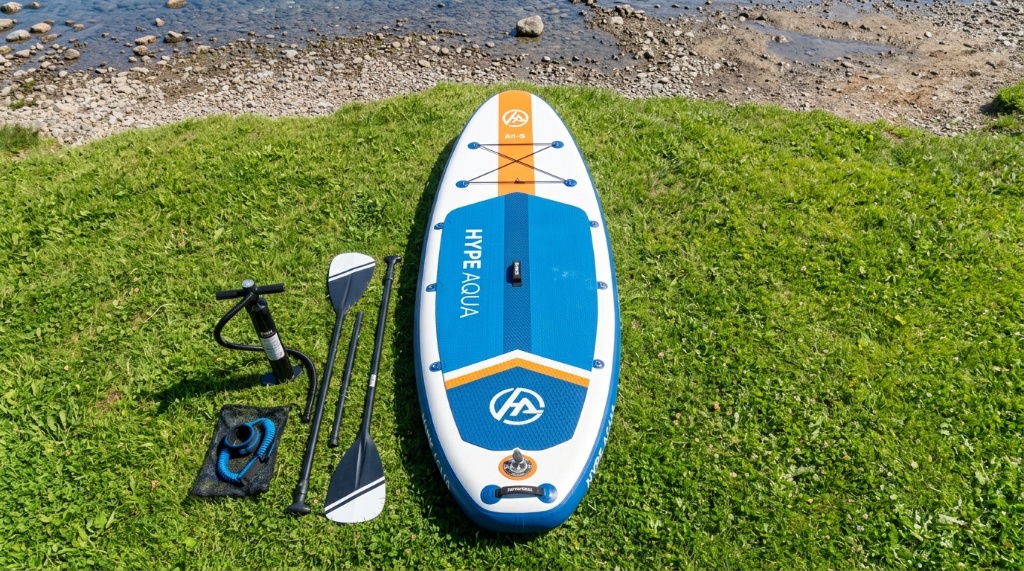
Preparing your board follows a logical sequence. Doing things out of order—like attaching the fin before inflating—can lead to bent fins or difficulty accessing the valve.
Step 1: Unfold and Lay Flat
Remove the board from its bag and unfold it on a clean, flat surface. Grass, a towel, or a yoga mat works well. Avoid gravel, pavement, or sand with shells, as these can abrade the PVC material. Let the board relax for a few minutes if it’s been tightly folded; this makes inflation easier.
Step 2: Connect the Pump and Inflate
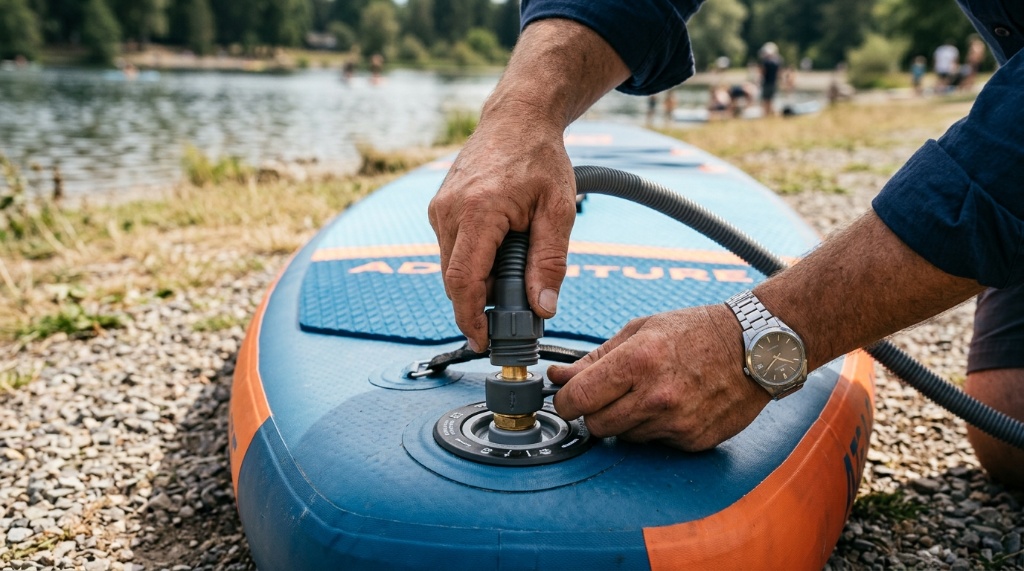
Locate the inflation valve at the tail of the board. Remove the valve cap and press the valve pin briefly to ensure it’s in the closed position (pin up). Attach your pump hose by twisting it onto the valve until secure.
Begin pumping. Most boards require 12–15 PSI, but always check your specific board’s manual or the valve area for the recommended pressure. The first 5 PSI inflates quickly; the last 5 PSI requires more effort. If you’re using a manual pump in hot weather, this is where fatigue sets in. An electric pump with an auto-shutoff feature can reach the target PSI without manual effort, though you’ll still need to monitor it.
Once you reach the recommended PSI, disconnect the pump. The valve will seal automatically. Replace the valve cap.
Step 3: Attach the Fin
Most inflatable paddle boards use a single center fin or a tri-fin setup. For single-fin boards, slide the fin into the fin box and secure it with the provided screw or pin. Tighten firmly but not excessively—over-tightening can crack the fin box.
If your board has side fins, they are usually fixed and don’t require installation. Check that they aren’t bent or damaged.
Step 4: Assemble the Paddle
Connect the paddle shaft sections and adjust the length. A general starting point: stand the paddle upright next to you—the handle should reach approximately eye level for flatwater cruising, or slightly shorter for surfing. Lock the adjustment clamps securely.
Pre-Launch Safety Checks
Before you lift the board, run through a quick safety checklist. These checks take less than a minute but prevent most common on-water issues.
- Leash connection: Attach the ankle leash to the board’s leash ring and secure the other end to your ankle. Do this on land—trying to attach a leash while floating is awkward and risky.
- Valve cap: Confirm the valve cap is fully screwed on. A loose cap can leak air slowly.
- Fin security: Tug gently on the fin to confirm it’s locked in place.
- Paddle leash (optional): If you use a paddle leash, connect it now.
- Personal flotation device: If required by local regulations or if you’re a beginner, put on your PFD before entering the water.
Understanding PSI: Why It Matters More Than You Think
PSI (pounds per square inch) is the measure of air pressure inside your board. It directly affects stiffness, glide, and stability.
| PSI Level | Effect on Performance | When It Happens |
|---|---|---|
| Below 10 PSI | Board feels spongy, flexes underfoot, tracks poorly | Under-inflation or air loss |
| 12–15 PSI | Optimal stiffness and glide for most boards | Correct inflation |
| Above recommended | Risk of seam failure or valve damage | Over-inflation |
Hot air expands, so a board inflated to 15 PSI on cool morning grass may read higher after sitting in direct sun. Conversely, inflating in air conditioning and then paddling in heat can cause pressure to rise. Inflate to the recommended PSI, then check again after a few minutes in the sun. If pressure has climbed significantly above the recommendation, release a small amount of air, Before you head out on the water, make sure your ears are protected by reviewing our guide on how to choose best surf ear plugs in florida.
Common Preparation Mistakes to Avoid
Even experienced paddlers make avoidable errors. Here are the most frequent ones and how to prevent them.
- Inflating on sharp surfaces: Small rocks or glass can puncture the board before you even reach the water. Always inflate on a soft, clean surface.
- Forgetting the fin: Paddling without a fin makes the board track poorly and spin easily. It’s a common oversight when rushing.
- Over-tightening the fin screw: Hand-tight is sufficient. Using tools can strip the threads or crack the fin box.
- Ignoring the weather: Offshore winds can push you away from shore. Check wind direction and speed before launching.
- Not testing the pump: A pump with a worn gasket won’t reach high PSI. Test your pump at home before heading out.
When to Consider an Electric Pump
Manual pumping is reliable and doesn’t require power, but it has real drawbacks. Reaching 15 PSI with a single-chamber manual pump can take 5–10 minutes of vigorous effort, and in hot weather, that’s exhausting before you’ve even paddled.
Electric pumps designed for paddle boards offer a practical alternative. They connect to your car’s 12V outlet or a portable battery and inflate to a preset PSI automatically. The trade-off is weight, dependence on a power source, and cost. For paddlers who inflate frequently, have limited upper-body strength, or paddle in hot climates, an electric pump can make the preparation process significantly easier. For occasional paddlers or those who prioritize simplicity, a manual pump remains a valid choice.
Final Checks Before You Launch
With the board inflated, fin attached, leash connected, and paddle assembled, you’re nearly ready. Do a final visual scan:
- Is the board free of visible damage or bulges?
- Is the valve cap tight?
- Is your PFD secured?
- Do you have water, sunscreen, and a phone in a dry bag if needed?
- Have you checked local rules about where paddle boarding is permitted?
Carry the board to the water using the center handle, keeping the fin away from rocks. Place it in shallow water, climb on from a kneeling position, and you’re ready to paddle.
Frequently Asked Questions
How long does it take to inflate an inflatable paddle board?
With a manual pump, expect 5–10 minutes depending on your fitness and the target PSI. Electric pumps typically take 8–12 minutes but require no physical effort. The last few PSI always take the longest.
Can I leave my paddle board inflated between sessions?
Yes, for short periods. Leaving it inflated for a few days is generally fine if stored out of direct sun and away from extreme heat. For long-term storage, deflate and fold it to prevent seam stress.
What happens if I paddle with too little air pressure?
The board will feel unstable and slow, and it may flex excessively under your weight. This makes balancing harder and reduces glide. Always inflate to the recommended PSI for your board.
Do I need a fin to paddle board?
You can paddle without a fin, but the board will track poorly and spin easily with each stroke. A fin is essential for directional stability, especially in wind or current.
How do I know if my board is over-inflated?
If the board feels rock-hard with no give when pressed, or if you hear creaking sounds from the seams, it may be over-inflated. Check the PSI with a gauge and release air if it exceeds the manufacturer’s recommendation.
Conclusion
Preparing an inflatable paddle board is a straightforward process, but the details matter. Inflate to the correct PSI, attach the fin securely, connect your leash before entering the water, and run through a quick safety check. These steps take only a few minutes and prevent the most common problems that ruin a paddling session. Whether you use a manual or electric pump, consistency in your preparation routine means you spend less time troubleshooting and more time enjoying the water.