What to Wear to a Country Club for the First Time: A Dress Code Cheat Sheet
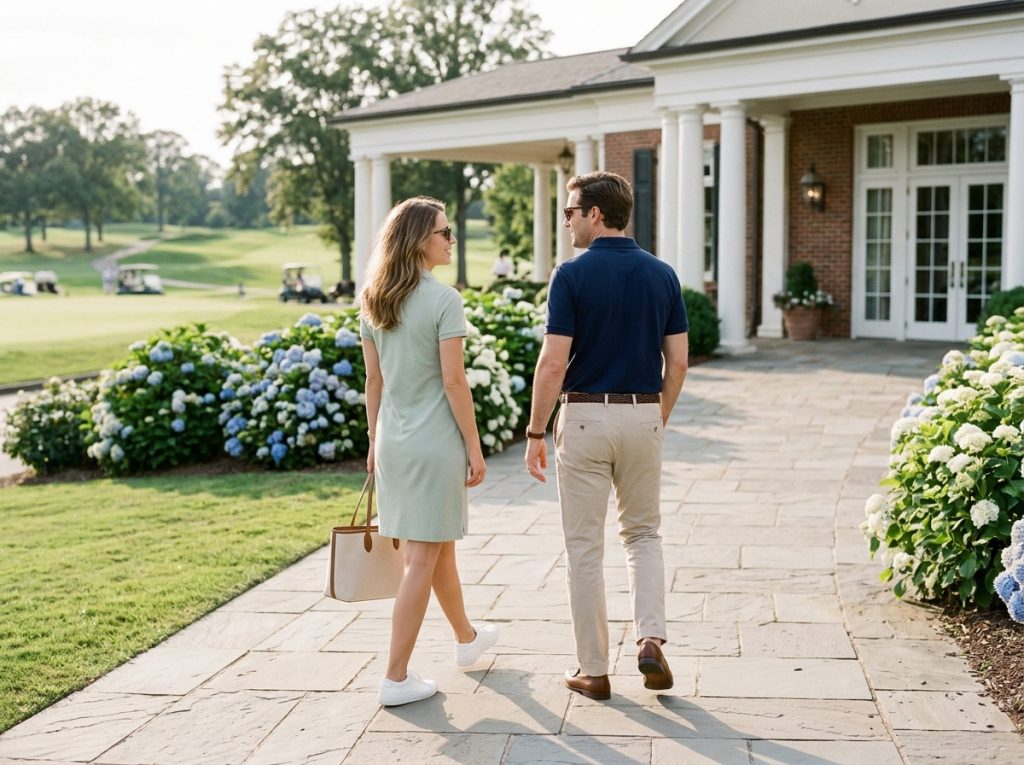
You have accepted an invitation to play at a private country club, and now the outfit hanging in your closet feels like a risk. Most first-time visitors worry about the wrong thing, such as the color of their polo, when the real violations usually involve denim, athletic wear, or the wrong footwear. Getting the clothes right starts with the feet, because footwear rules are the strictest and most enforced part of any club dress code. Understanding what to look for in golf shoes solves the hardest part of the puzzle, and the rest of your outfit follows a fairly predictable pattern.
Quick Answer
Wear a collared shirt, tailored pants or shorts, a belt, and proper golf shoes. Skip denim, T-shirts, gym clothes, and sandals. Most clubs expect collared shirts tucked in, shorts at or near the knee, and soft-spiked golf shoes on the course. Always confirm the specific club’s posted dress code before you arrive, because rules vary by region and by club culture.
Key Takeaways
- Collared shirts, tailored bottoms, and golf-specific shoes form the safe baseline at nearly every private club.
- Denim, athletic wear, tank tops, and open-toe shoes are the most common sources of dress code violations.
- The clubhouse often enforces stricter rules than the course, so plan one outfit for both if you are staying for a meal.
- Soft spikes and clean shoes matter more than brand or price, and many clubs prohibit metal spikes entirely.
- When in doubt, ask your host or check the club’s website rather than guessing at the door.
The Universal Country Club Dress Code Rules
Private clubs rarely publish a single standardized dress code, but the same handful of rules appear almost everywhere. If you follow the baseline below, you will pass the dress check at the vast majority of clubs in North America, the UK, and Australia.
What Almost Every Club Requires
- A collared shirt, usually a polo or a button-down. Many clubs accept collared women’s tops without sleeves, but men’s shirts almost always need sleeves.
- Tailored pants or shorts. Chinos and golf-specific shorts work; cargo shorts and drawstring styles often do not.
- A belt when your shirt is tucked in, which is the default expectation for men.
- Closed-toe shoes with soft spikes or spikeless soles on the course.
- Shirts tucked in, hats worn forward, and caps removed inside the clubhouse.
What Almost Every Club Prohibits
- Denim of any kind, including designer jeans and denim shorts.
- T-shirts, tank tops, and athletic jerseys.
- Gym wear, including leggings as outerwear at many traditional clubs.
- Sandals, flip-flops, and open-toe shoes on the course or in the dining room.
- Swimwear outside the pool area.
The details shift between clubs, but the pattern is consistent: the more traditional the club, the more formal the expectation, and the more strictly the staff enforces it.
Men’s Outfit: A Safe Formula
A collared polo or button-down shirt paired with chinos or golf shorts, a leather belt, and golf shoes will work at nearly every club. Choose solids or subtle patterns over loud graphics. Match your belt to your shoes when possible, and keep your shirt tucked in unless the club explicitly allows it untucked.
Shirt and Shorts Details
Look for shorts that end at or just above the knee. Anything shorter reads as casual, and anything longer reads as cargo or athletic wear. For pants, chinos and golf-specific trousers are safe; joggers and sweatpants are not, even when they cost more than a pair of tailored slacks.
Footwear and Socks
Wear golf shoes designed for the course, not running shoes or sneakers. Spikeless golf shoes work well for most conditions and satisfy nearly every club’s rules. If you prefer traditional spikes, confirm the club allows soft spikes only, because metal spikes are banned almost everywhere. Pair your shoes with ankle or crew socks; no-show socks can look too casual in a formal clubhouse.
Women’s Outfit: A Safe Formula
A collared or modestly cut sleeveless polo with golf shorts, a skort, or tailored pants covers nearly every situation. Skorts remain the most universally accepted choice because they satisfy both the coverage expectation and the athletic look most clubs expect on the course.
Top and Bottom Choices
Choose a polo, a collared sleeveless top, or a modest athletic top designed for golf. Avoid tank tops, halter tops, and anything with a very deep neckline. For bottoms, skorts, golf shorts, and tailored pants work; leggings alone often do not, though some modern clubs now accept them if paired with a longer top. Check the specific club’s rules if you plan to wear leggings.
Shoes and Accessories
Wear golf shoes with soft spikes or spikeless soles. Sandals, fashion sneakers, and open-toe shoes fail at most clubs, even in warm weather. A visor or cap is fine on the course but should come off in the clubhouse dining room. Keep jewelry simple and avoid anything that jingles during your swing.
Why Footwear Matters More Than You Think
Footwear is the single most enforced element of a country club dress code. Staff members regularly check shoes at the bag drop and at the clubhouse entrance, and a pair of running shoes will get you turned away faster than a wrinkled shirt. This is partly about tradition and partly about protecting the greens, since soft-spiked and spikeless golf shoes distribute weight without tearing up the turf.
Beyond the rules, the right shoe affects how you play. Golf shoes provide lateral stability during the swing, waterproof protection on dewy mornings, and traction on slopes where a running shoe would slide. That is why serious players treat footwear as equipment rather than fashion, and why a reliable golf retailer is worth consulting before you commit to a pair. If you are shopping for your first proper pair, browsing a specialist selection of golf shoes helps you compare traction styles, waterproofing, and fit before you decide.
Match Your Shoes to the Club and the Weather
Spikeless shoes handle dry summer rounds and clubhouse transitions well because they look closer to a casual sneaker. Soft-spiked shoes give more grip in wet conditions and on hilly courses. Waterproof models matter in early spring and late autumn, while breathable mesh models keep your feet cooler in summer heat. If you play one course regularly, ask what the majority of members wear and follow that lead.
C Course vs. Clubhouse: Where the Rules Change
The course and the clubhouse often enforce different standards, and the clubhouse is usually stricter. You can sometimes wear golf attire with a cap on the course, but the dining room may require you to remove your hat, tuck in your shirt, and switch to a collared button-down for dinner.
Common Clubhouse Expectations
- Caps and visors removed.
- Shirts tucked in and, at some clubs, a jacket for men after a certain hour.
- No golf shoes with visible mud or grass in the dining area.
- No swimwear, gym wear, or athletic shorts.
How to Prepare for Both
Pack a spare collared shirt and a pair of loafers or clean casual shoes in your bag if you plan to eat at the club after your round. If the club has a formal dining room, ask your host whether a jacket is expected. A little preparation prevents an awkward detour to the pro shop for a replacement shirt.
Frequently Asked Questions
Can I wear jeans to a country club?
No. Denim is prohibited at nearly every private country club, including designer jeans. Even clubs that have relaxed other rules tend to keep the denim ban in place. Wear chinos or tailored shorts instead.
Do I need golf shoes, or can I wear sneakers?
Most clubs require golf-specific shoes with soft spikes or spikeless soles. Running shoes, fashion sneakers, and sandals usually fail the dress check. Spikeless golf shoes are a good first pair because they satisfy the rules and transition easily into the clubhouse.
What should I wear if I’m only visiting the clubhouse for a meal?
Wear collared shirts, tailored pants or shorts, closed-toe shoes, and remove your hat indoors. The clubhouse typically enforces stricter rules than the course, so lean more formal rather than less.
Are cargo shorts allowed on the course?
Rarely. Most clubs treat cargo shorts as too casual because of the extra pockets and relaxed cut. Choose flat-front golf shorts or chinos to stay safely within the rules.
Can women wear leggings at a country club?
It depends on the club. Traditional clubs often prohibit leggings as outerwear, while some modern clubs allow them if paired with a longer top or skort. Check the specific club’s dress code before you arrive.
Do I need to tuck in my shirt?
At most clubs, yes. Men are generally expected to keep shirts tucked in, and some clubs extend the rule to women’s polos. If you are unsure, tuck it in and adjust once you see what other members do.
Conclusion
Country club dress codes look intimidating, but they follow a simple hierarchy: collared shirts, tailored bottoms, and proper golf shoes. Footwear is the most enforced element, so invest in a pair of soft-spiked or spikeless golf shoes before you spend money on anything else. Confirm the specific club’s rules with your host or its website, pack a spare collared shirt if you plan to dine afterward, and leave the denim and athletic wear at home. Get those basics right and you can focus on your round instead of your outfit.